
Our AI Search research
has been cited in
validation.




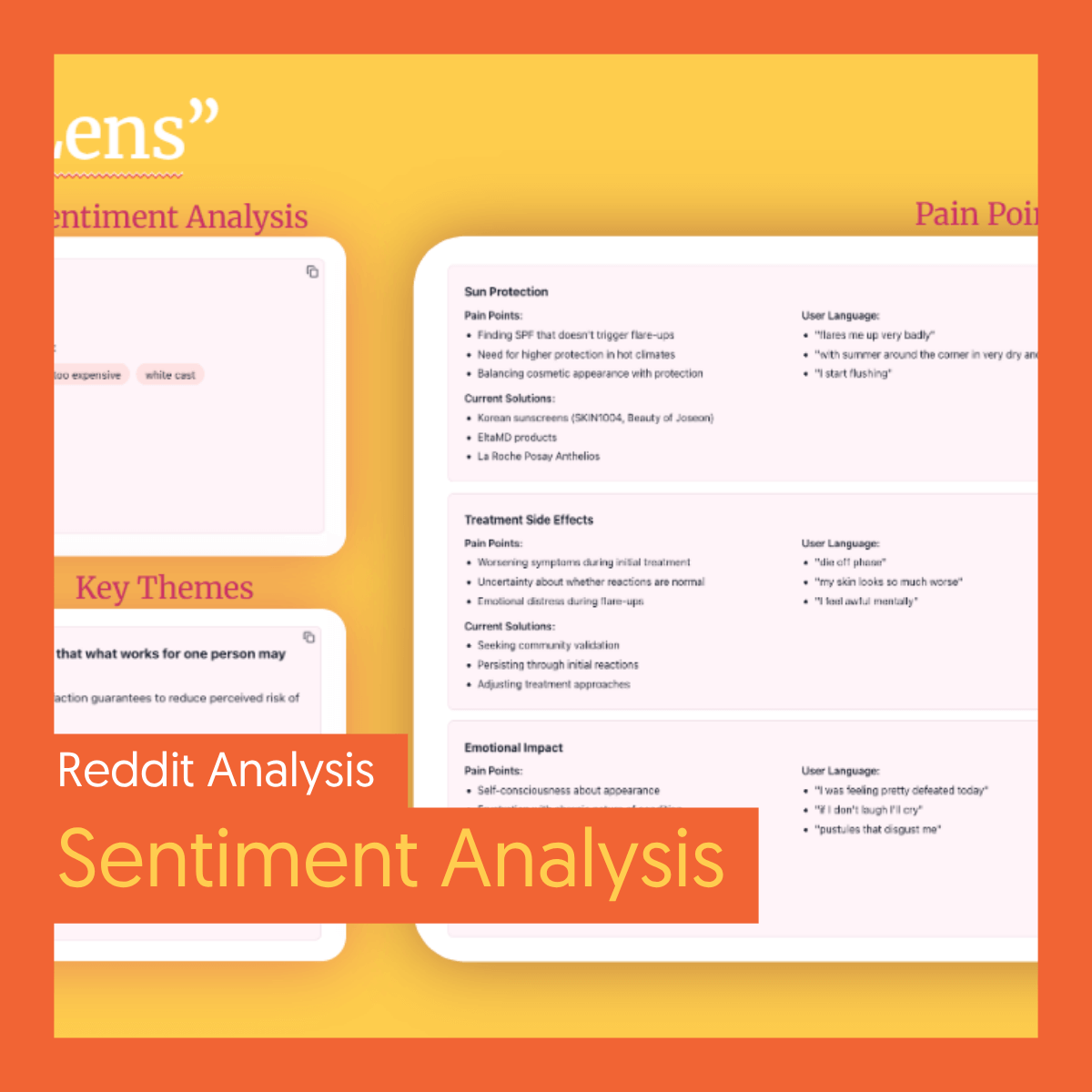
Sourcing new messaging angles from real-world pain
A supplements brand entered the menopause wellness category.
RedditLens scanned forums and subreddits to surface high-friction pain points overlooked in traditional research – e.g. “feeling dismissed by doctors”, “brain fog”, “relationship strain.”
These themes directly informed a brand campaign that achieved 4.5x ROAS on first touch.
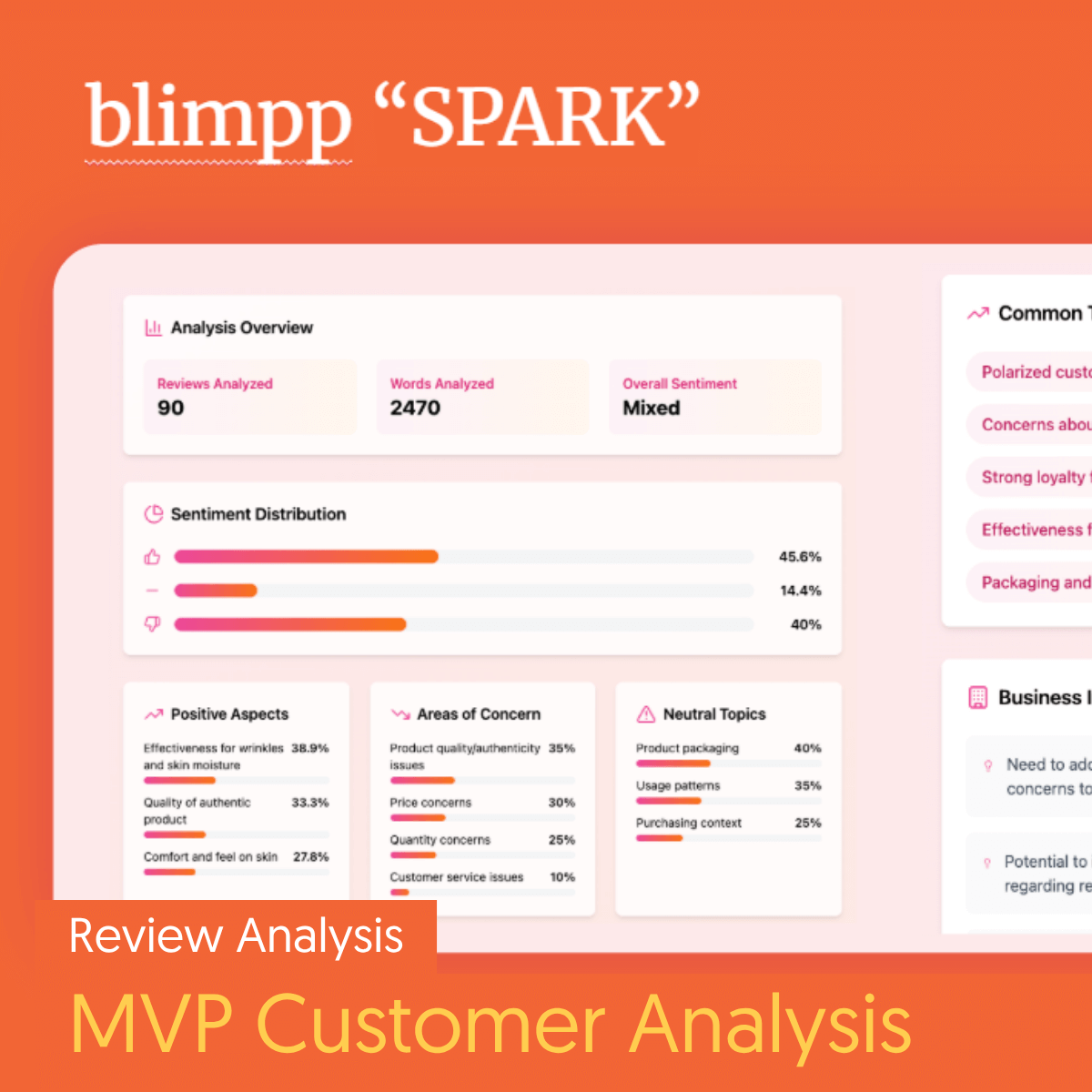
Building a product roadmap with review signals
A new product team needed to prioritize features and fix early-stage churn. SPARK revealed that while formulation scored high, users felt disappointed by packaging quality and price justification.
These insights fed into a product relaunch strategy that directly impacted on reduced refund rates.
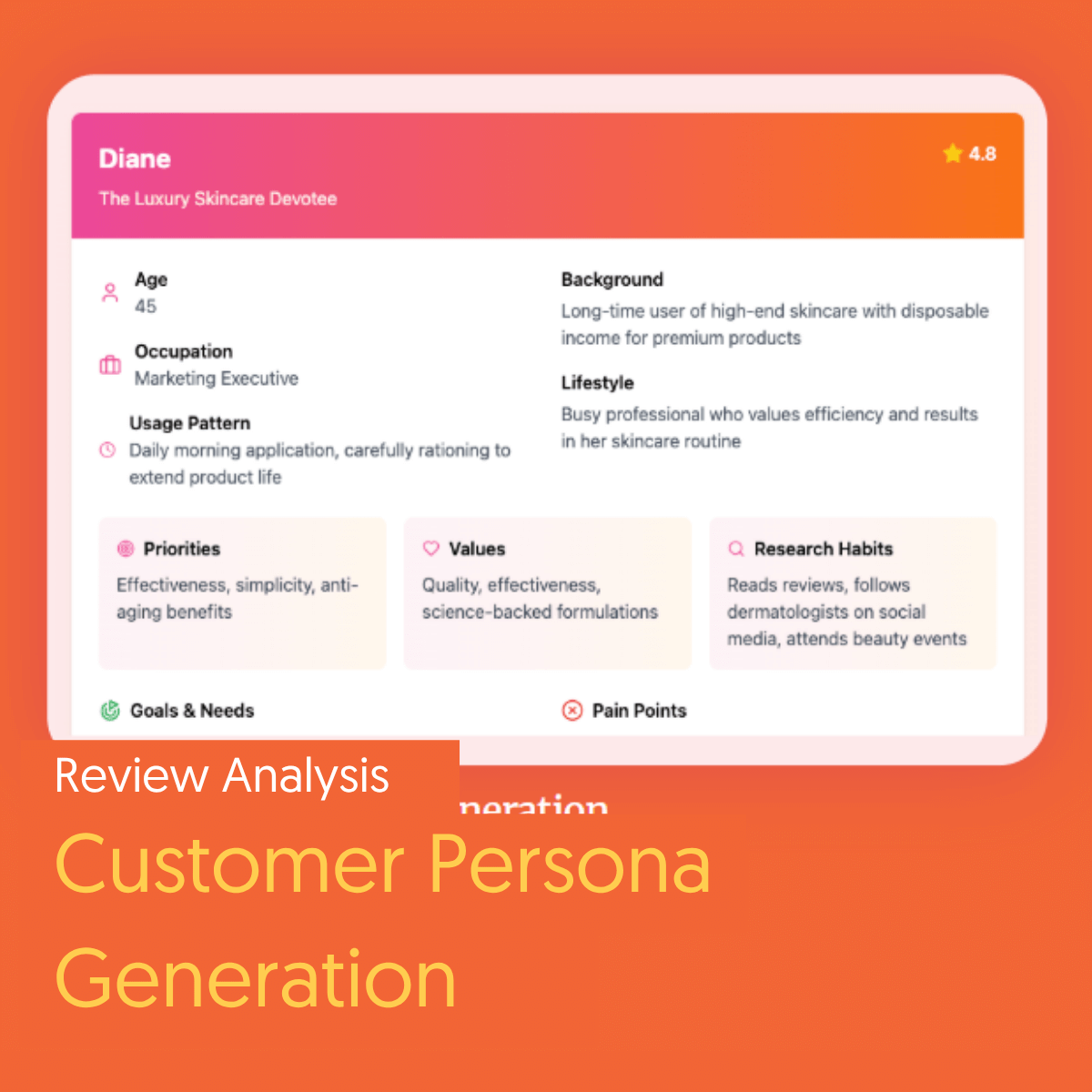
Defining high-conversion personas from voice of customer
A client lacked clarity on who their best customers really were.
SPARK clustered reviews into 3 primary personas, including “Luxury Devotee” and “Skeptical First-Timer”, each with distinct motivations.
These were used to personalize landing pages and Meta ad sets, driving a 24% lift in CTR on cold traffic.
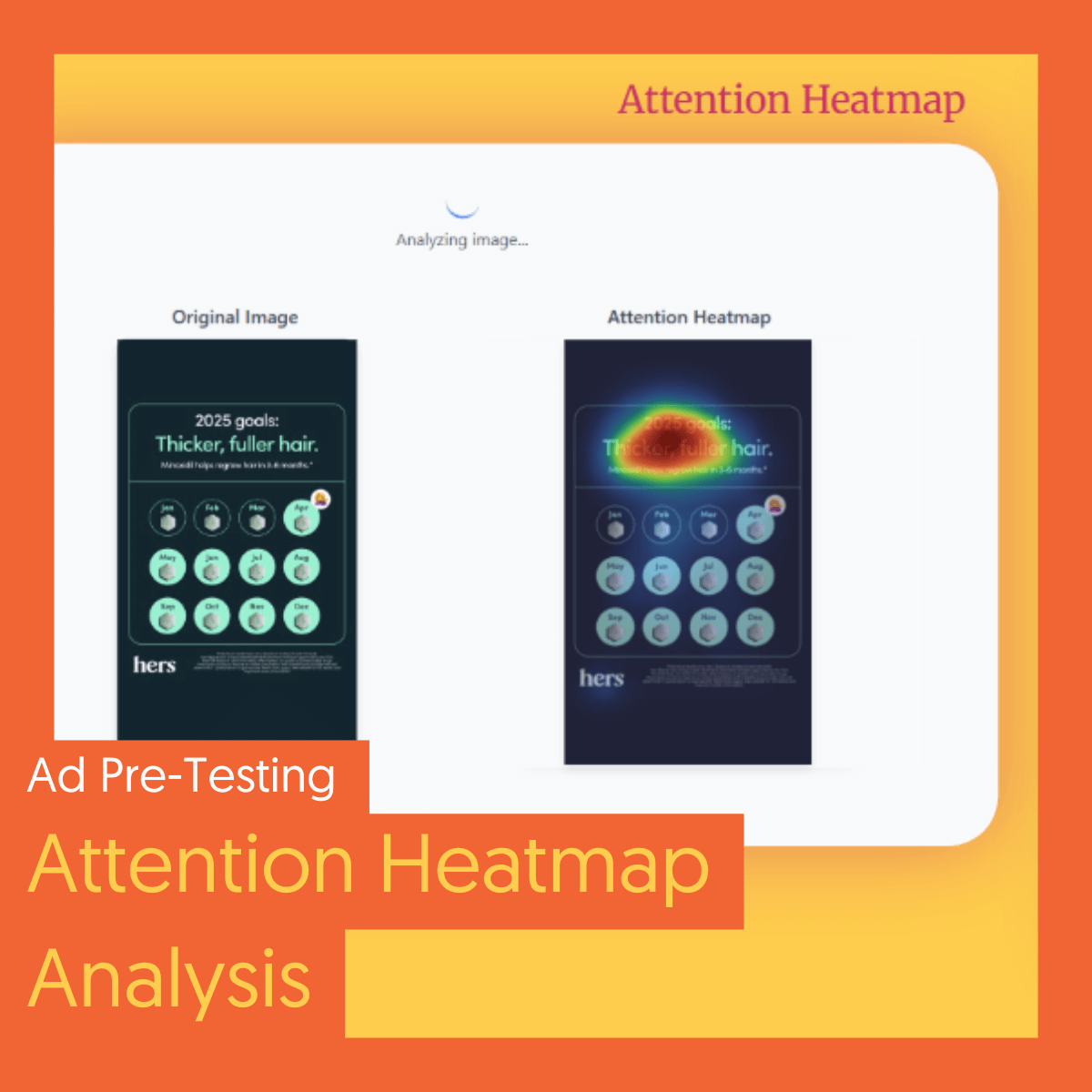
Visual focus mismatch caught before wasting budget
A haircare client submitted creative with strong copy, but weak visual hierarchy.
AdVitals’ attention heatmap showed the CTA was being ignored while attention pooled on a minor design element.
With visual rebalancing and clearer focal emphasis, engagement increased by 39% without any copy change.
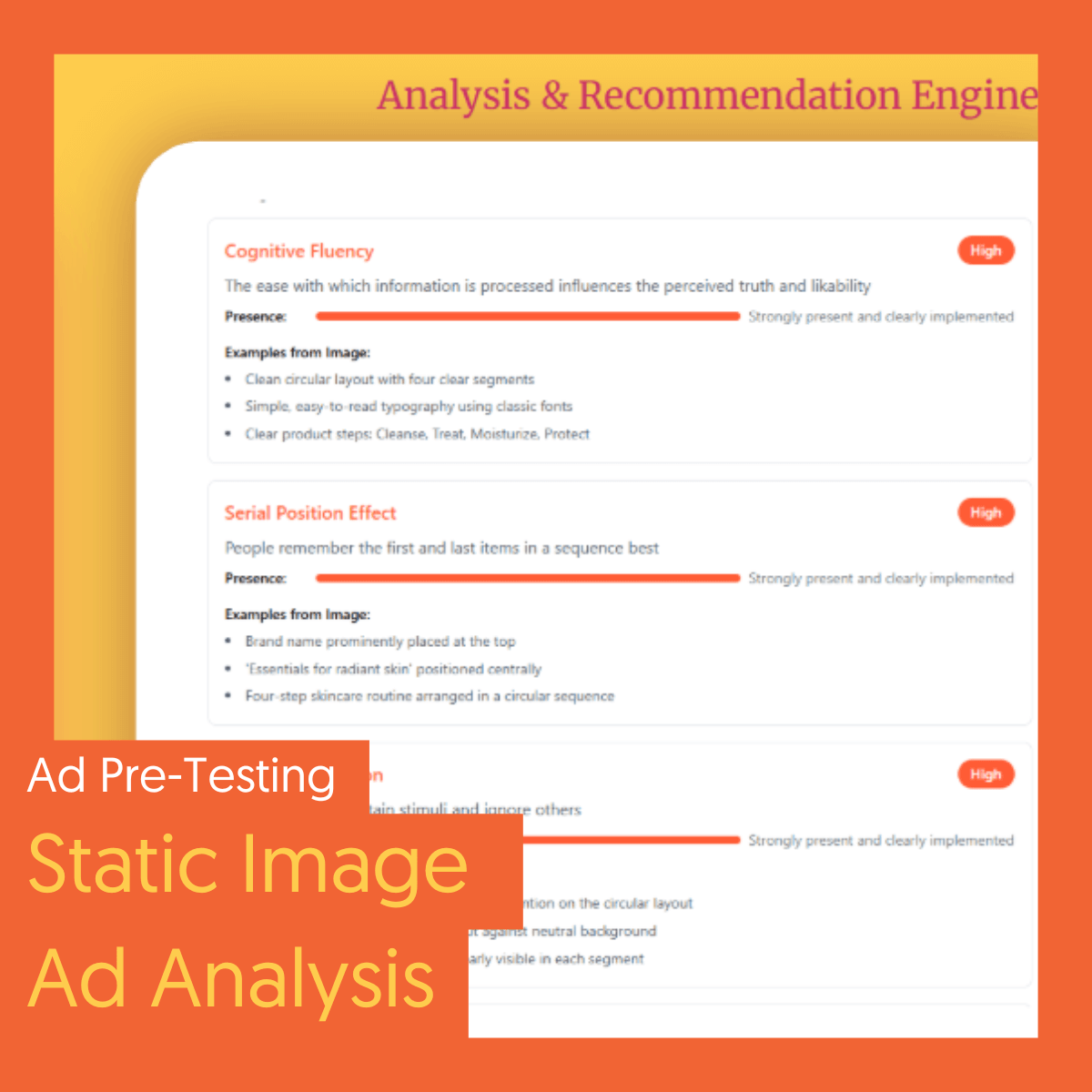
Predicting winning ads before launch
A beauty brand tested five static ads for Performance Max using AdVitals before launch.
The highest-scoring creative showed superior cognitive fluency and clear sequence framing (Serial Position Effect).
That variant later outperformed the others by 2.1x in ROAS, validating the predictive value of pre-testing.
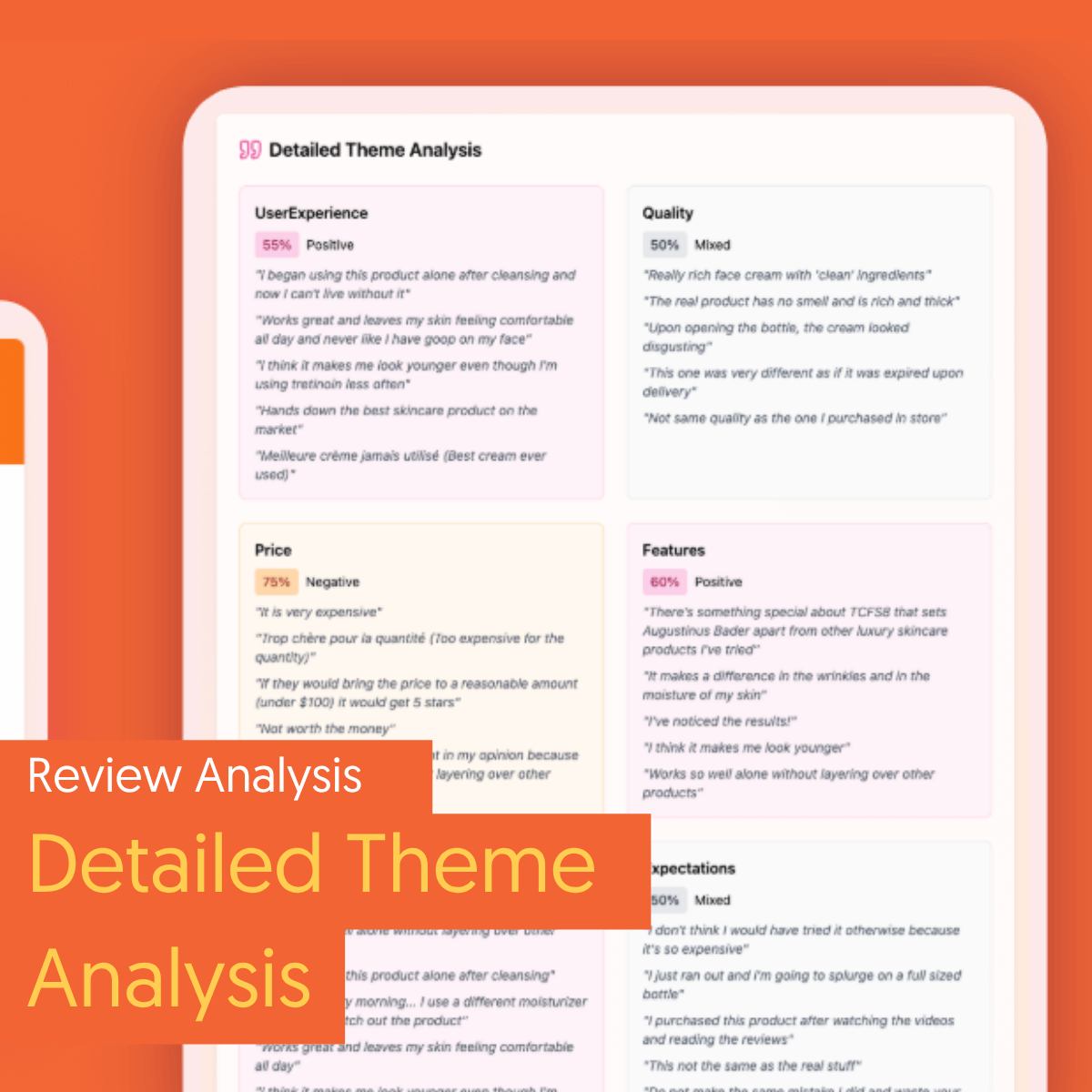
Transforming unstructured feedback into campaign-ready messaging
A DTC skincare client had 1,000+ reviews but no clarity on what mattered most to customers.
SPARK scored and clustered reviews into 5 actionable themes (price sensitivity, texture, scent, packaging, long-term effects).
Outputs powered a new email and landing page flow, leading to 48% higher engagement on remarketing assets.
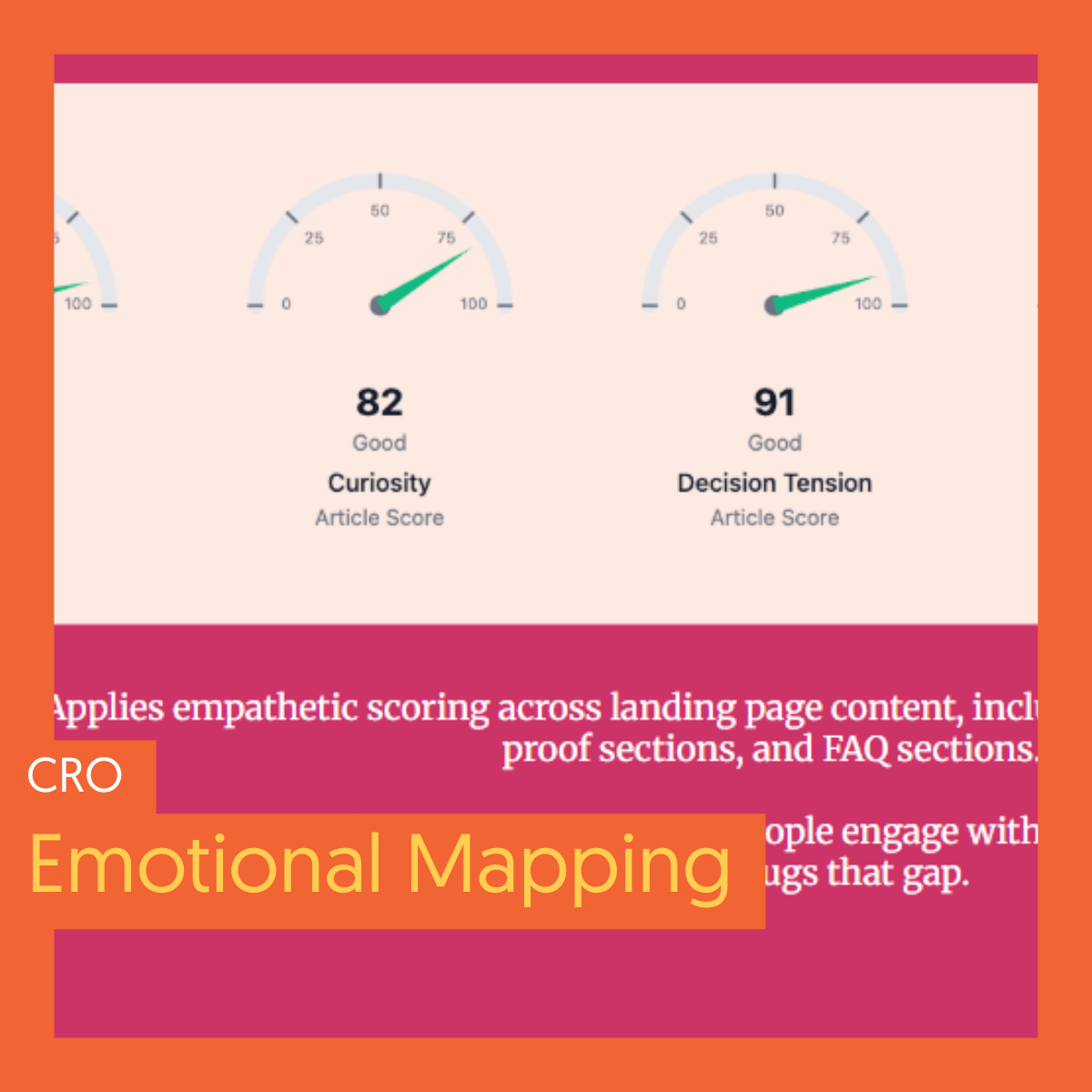
Why a high-traffic PDP underperformed despite a great offer
A premium beauty brand saw low conversion on a best-selling product page.
SenseIQ revealed the hero copy lacked empathy and emotional intensity, while FAQs failed to address core objections.
After reordering key sections and rewriting headlines with stronger emotional framing, conversion rates increased by 32%.