How to Use Perplexity AI To Find Beauty Keywords for Beauty Brand SEO

Navigation

Keyword targeting is essential for beauty brands aiming to boost SEO. However, beauty trends change rapidly, pushed by influencers, hashtags and new products daily. However, excelling at beauty SEO requires more than just pulling beauty keywords from thin air or an outdated database. Beauty trends evolve rapidly, pushed by influencer videos, viral hashtags, and new product drops almost daily. Relying solely on guesswork fails to capture high-potential opportunities rooted in these real-time shifts.

Perplexity, an AI-powered keyword tool, solves this issue. It uses natural language processing to uncover fresh, valuable query combinations by analyzing the latest beauty data – blogs, forums, reviews, social media. The tool’s algorithms work 24/7 to surface valuable query combinations that traditional keyword tools simply cannot match. This empowers beauty brands to peer into the minds of beauty consumers and tailor content accordingly, fulfilling informational needs while organically driving product discovery.

Let’s explore how beauty brands can harness Perplexity to amplify organic search performance through savvy keyword targeting.

Step-by-Step Guide

Expert Q&A

12 Responses

    1. Keyword discovery should be an ongoing process. Regularly scheduled sessions (e.g. quarterly or biannually) can help you catch new trends, changes in consumer behavior, and emerging products or topics in the beauty industry.

    1. Besides Perplexity.ai and Ahrefs, several other tools can enhance your keyword research process, including Google Keyword Planner (for search volume data and trends), SEMrush (for competitive analysis and keyword suggestions), and Moz Keyword Explorer (for keyword suggestions and SERP analysis). Social listening tools like BuzzSumo can also help to reveal trending topics in the beauty industry.

    1. To determine user intent, analyze the keyword context and the type of content that ranks for it on search engine results pages (SERPs). Generally, if a keyword triggers how-to guides, articles, or blog posts, the intent is informational. If product pages or shopping categories rank high, the intent is transactional. Query modifiers like “buy,” “how to,” “review,” or “best” can also indicate the user’s intent.

    1. Start by grouping keywords based on their thematic relevance (e.g., skincare, makeup tutorials). Then, categorize them by intent (informational, transactional, etc.) and content type (blog post, product review). Using color coding or tags can help visualize these categories. Consider creating separate tabs or sections in your spreadsheet for different categories for easier management.

    1. For highly competitive keywords, focus on creating high-quality, unique content that offers value beyond what’s currently ranking on the SERP. Consider targeting long-tail keywords that are less competitive but still relevant. Building a strong backlink profile and enhancing your site’s overall SEO (speed, mobile optimization, user experience) can also improve your competitiveness.

    1. Measure success by tracking changes in your website’s organic traffic, keyword rankings, and conversion rates over time. Tools like Google Search Console and Ahrefs can provide insights into traffic trends and keyword performance.

Leave a Reply

Your email address will not be published. Required fields are marked *

Video

Tips

  • In addition to using Perplexity.ai, explore question-based platforms like Quora, Reddit, and beauty forums to find out what real users are asking about. This can provide additional insights into your keyword research.
  • Use social media platforms and hashtag trends to discover what topics are currently popular in the beauty community.
  • Look at your competitors’ websites and see what topics they are covering. Use tools like Ahrefs to uncover their top-performing keywords and content, which can inspire your keyword discovery process.
  • At the bottom of Google’s search results page, check the “Related searches” section for additional keyword ideas that are related to your initial search terms.
  • Focus on long-tail keywords that are more specific and less competitive. These can attract more targeted traffic and have a higher conversion rate.
  • Use SEO tools that allow you to import data directly into your spreadsheet, saving time on manual entry. Tools like Ahrefs can export keyword data directly to a CSV file, which can then be imported into your spreadsheet.
  • In your spreadsheet, apply conditional formatting to quickly visualize high-opportunity keywords. For example, you could highlight keywords with high search volume but low competition in green.
  • Develop a system to prioritize keywords based on a combination of factors, such as search volume, keyword difficulty, and relevance to your brand. This can help focus your efforts on the most impactful keywords.
  • Add a column to your spreadsheet to track the current ranking of your website for each keyword. This will help you measure progress over time and adjust your strategy as needed.
  • Don’t choose keywords without digging into search volume and difficulty first.
  • Don’t focus solely on commercial purchase-driven keywords. Include some informational keywords too to attract visitors throughout the buying journey.

Case Study

Enhancing SEO for a 7 figure skincare brand – a journey from organic obscurity to industry authority.

Background

The brand a fledgling online beauty retailer specializing in organic skincare and cruelty-free makeup products, struggled to gain visibility and attract traffic amidst the saturated digital beauty market. Despite a mix of high-quality products and strong word-of-mouth, their website remained buried on the second page of Google search results, invisible to their target audience.

Objective

The primary goal was to enhance their organic search presence – increase organic traffic and improve search engine rankings for targeted keywords related to organic skincare and cruelty-free makeup. The strategy focused on leveraging AI generative practices, from initial keyword discovery to content optimization.

Process Overview

1. Initial Keyword Discovery
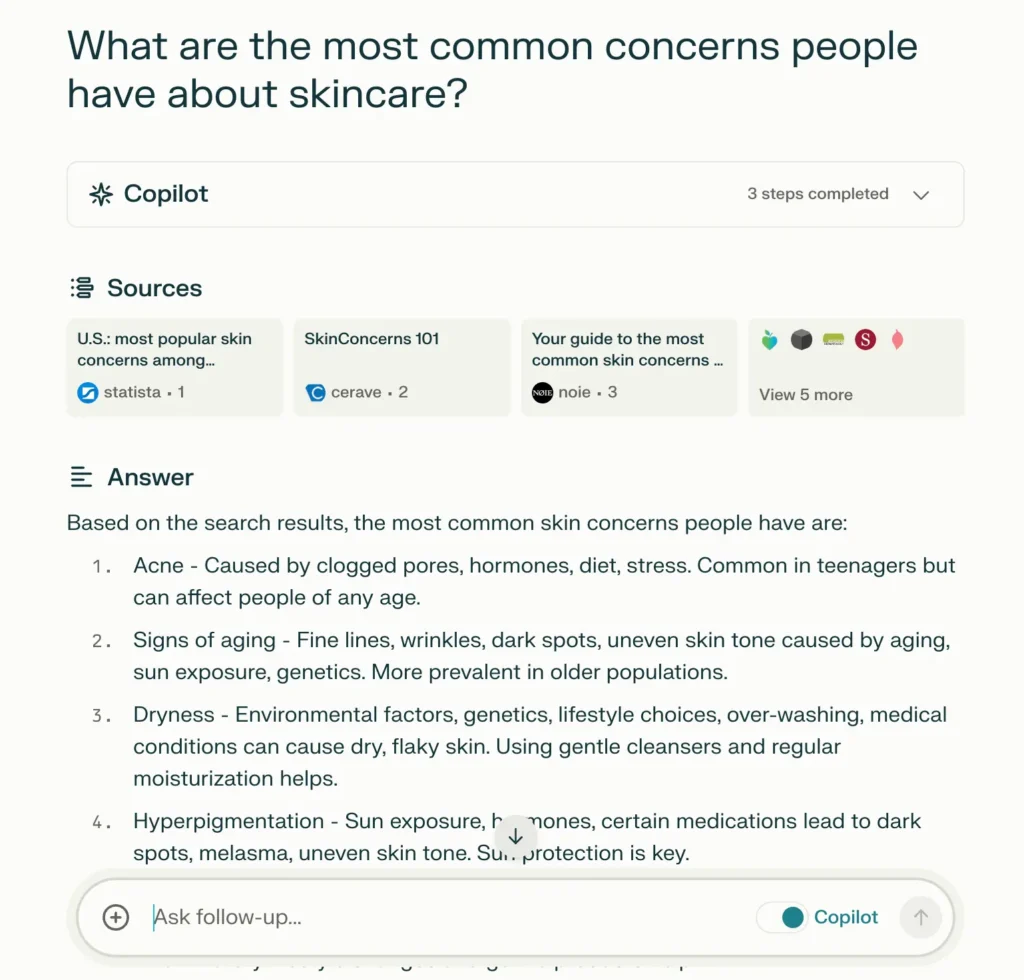
  • Action Taken: The team utilized Perplexity.ai to identify broad topics within the organic skincare and cruelty-free makeup niche. Queries like “What are the most common concerns about organic skincare?” provided insights into consumer interests.
  • Outcome: A comprehensive list of broad and niche keywords, including “best organic moisturizers,” “cruelty-free makeup brands,” and “organic skincare routines.”
2. Keyword Ideas Sheet Generation
  • Action Taken: A detailed spreadsheet was created, categorizing keywords by search volume, difficulty, and user intent. Ahrefs helped validate and expand the list, revealing gaps in the market.
  • Outcome: An actionable keyword ideas sheet with prioritized keywords for content creation, segmented into various tabs based on user intent.
3. Content Generation Strategy
  • Action Taken: Based on the identified keywords, the band designed a content calendar aligning with user intent. Informative blog posts were planned for informational queries, while product reviews targeted transactional queries.
  • Outcome: A diverse array of content that addressed specific user questions, improved site engagement, and increased time on site.

Results

  • Increased Organic Traffic: Within six months, the brand saw a 70% increase in organic traffic, with significant improvements in both new and returning visitors.
  • Improved SERP Rankings: Targeted keywords moved from the second page to the top 5 search results on Google, with “best organic moisturizers” securing a spot in the coveted top 3.
  • Higher Engagement and Conversion Rates: The alignment of content with user intent led to a 40% increase in page views per session and a 25% increase in conversion rates for products featured in blog posts and reviews.

Key Takeaways

  • Keyword Relevance and Intent Matching: Identifying and targeting the right keywords based on user intent was crucial for attracting qualified traffic and improving search rankings.
  • Content Quality and SEO Optimization: High-quality, engaging content optimized for both users and search engines was key to surpassing competitors in SERP rankings.
  • Continuous Analysis and Adaptation: Regularly reviewing and updating the keyword sheet and content strategy in response to market trends and performance analytics ensured sustained growth.

You Might Also Like

About This Article

1 votes – 100.00%

Co-authored by:

Certified Consultant

1 votes – 100.00%
Navigation